History of the St. Augustine Alligator Farm Zoological Park
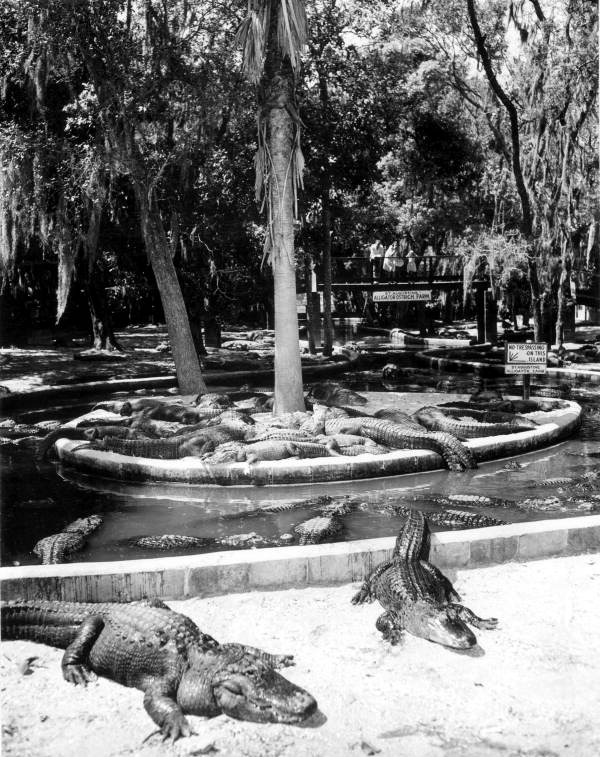
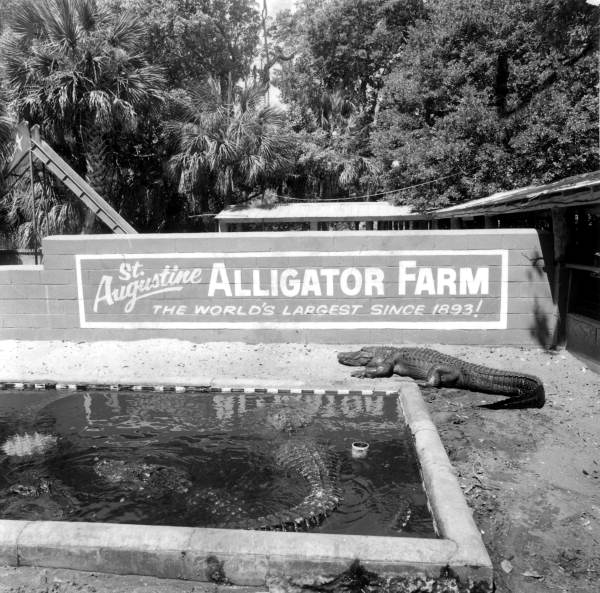 As lovers of the outdoors and its most spectacular creatures and wildlife, it’s no surprise the St. Augustine Alligator Farm Zoological Park is one of our most favorite places in town – particularly to take visitors and kids. But even for locals, the charm and adventure that awaits at the Alligator Farm makes it a special place to visit every time. What began as a roadside attraction, one of Florida’s oldest, has since become a leader in wildlife research and conservation. It’s located on Anastasia Island, just a few minutes from historic downtown, and exhibits dozens of species of crocodilians, alligators, rare reptiles, mammals and birds. It’s an accredited zoo and continues to be a quintessential Florida attraction, offering a thrilling educational and interactive experience for anyone and everyone.
It all began in 1893, just two miles from its current location. Known as the St. Augustine Alligator Farm at South Beach, it was merely a stop on the Anastasia Island Tram, which carried vacationers from their accommodations to other attractions within the City of St. Augustine. It was founded by George Reddington and Felix Fire, who collected alligators for display to entice travelers to buy souvenirs. Over time, the gators themselves became the attraction, and in the 1920s, the park moved to its current location further down Anastasia Boulevard, featuring more rare and beautiful reptiles. In 1937, Reddington sold the park to community businessmen, W.I. Drysdale and F. Charles Usina, who ran the park until Usina’s death in 1966. The Alligator Farm continues to be run by the Drysdale family, who eventually started acquiring more wildlife, like ostriches, snakes, crocodiles, Galapagos tortoises, monkeys and birds. They even garnered national attention in the late 1960s and early 1970s, when alligators were listed as endangered species. The
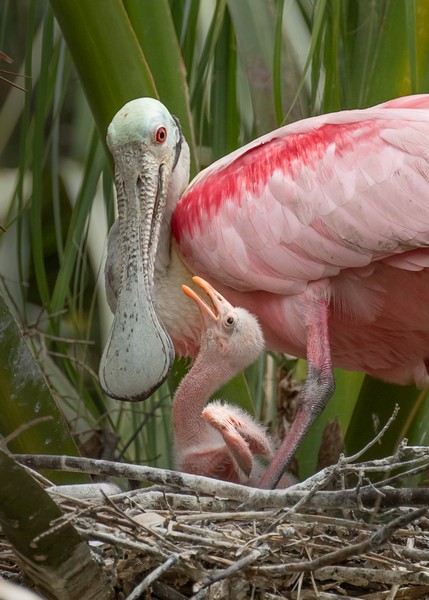
farm started working with scientists from the University of Florida around this time, inviting them to do research on the premises, including scientific studies of alligators and the waters they lived in. More improvements and exhibits continued to be added, including the theater to host more formal exhibitions and lectures – and The Rookery, which is home to wild and confined birds like herons, egrets, ibis, rosette spoonbills and more. The Rookery continues to operate in cooperation with the Florida Audubon Society, and includes a boardwalk hovering over many smaller alligators.
In 1989, the Alligator Farm became an accredited zoo, and also acquired its largest croc: Gomek. At almost 18 feet long and nearly 2,000 pounds, Gomek was one of the largest crocodilians to ever live at a zoo. He was from New Guinea, and lived out much of his adult life at the Alligator Farm – and was considered one of the tamest captive crocodiles in existence. By 1993, the farm met a huge milestone, becoming the only facility in the world to exhibit every living species of crocodilian – all 24. In 1997, Gomek passed away from heart disease at approximately 70 years old. He lives on in an exhibit entitled, Gomek Forever, where he remains taxidermied and just steps from his successor, Maximo – a beloved 15-foot, 1,250-pound saltwater croc. Maximo was collected by aborigines in Australia and came to the farm in 2003, along with his mate Sydney. Maximo is the park’s largest saltwater crocodile currently on display, and he and Sydney can be viewed in their habitat, both above and below water.
Today, the park also includes the Crocodile Crossing Zip Line, which takes you flying over the park, seeing these wild animals like never before. The exhibit, Oasis on the Nile, features Egyptian artifacts, replicas of famous antiquities, and of course Nile crocodiles. One of the most recent additions is Sloth Landing, home to four Hoffman’s two-toed sloths, who share a rainforest habitat with other species from the tropics.
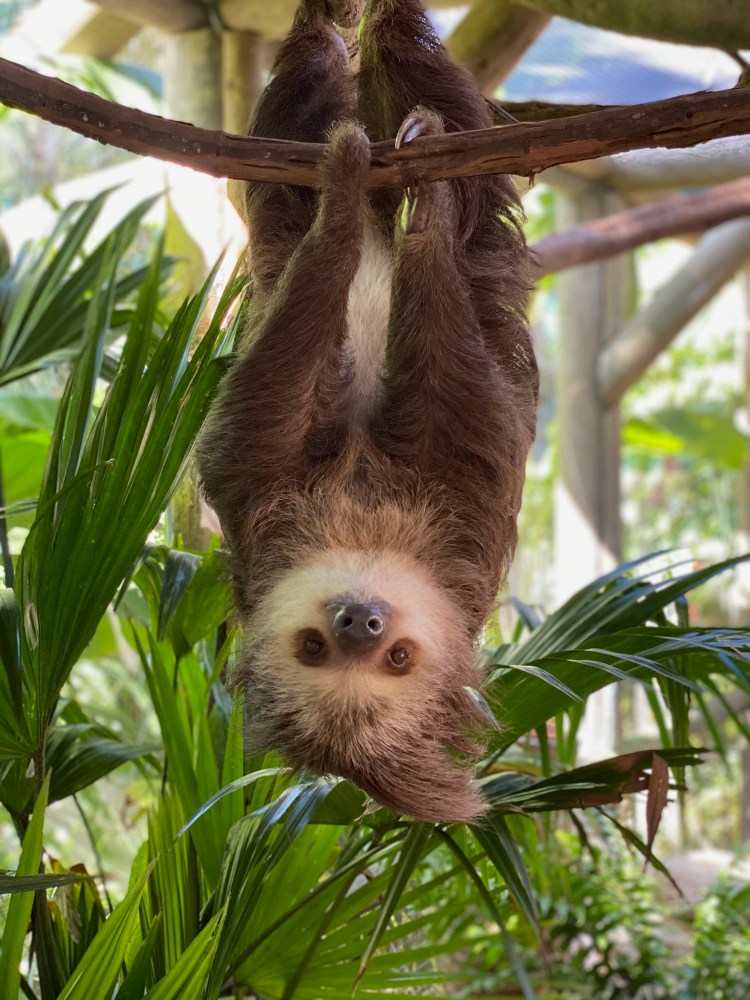
The Alligator farm isn’t just thrilling, it educates and instills an appreciation and understanding of wildlife that is commonly thought of as creatures to fear. We’re so thankful for their continued wildlife research and conservation, and invite you to take an adventure at the farm to watch an alligator feeding, hold a live snake or zip-line through the zoo with alligators and crocs right under your feet! You can even encounter Galapagos tortoises, the oldest residents at the park. Tickets are available online or at the gate, and they are open every day of the year.
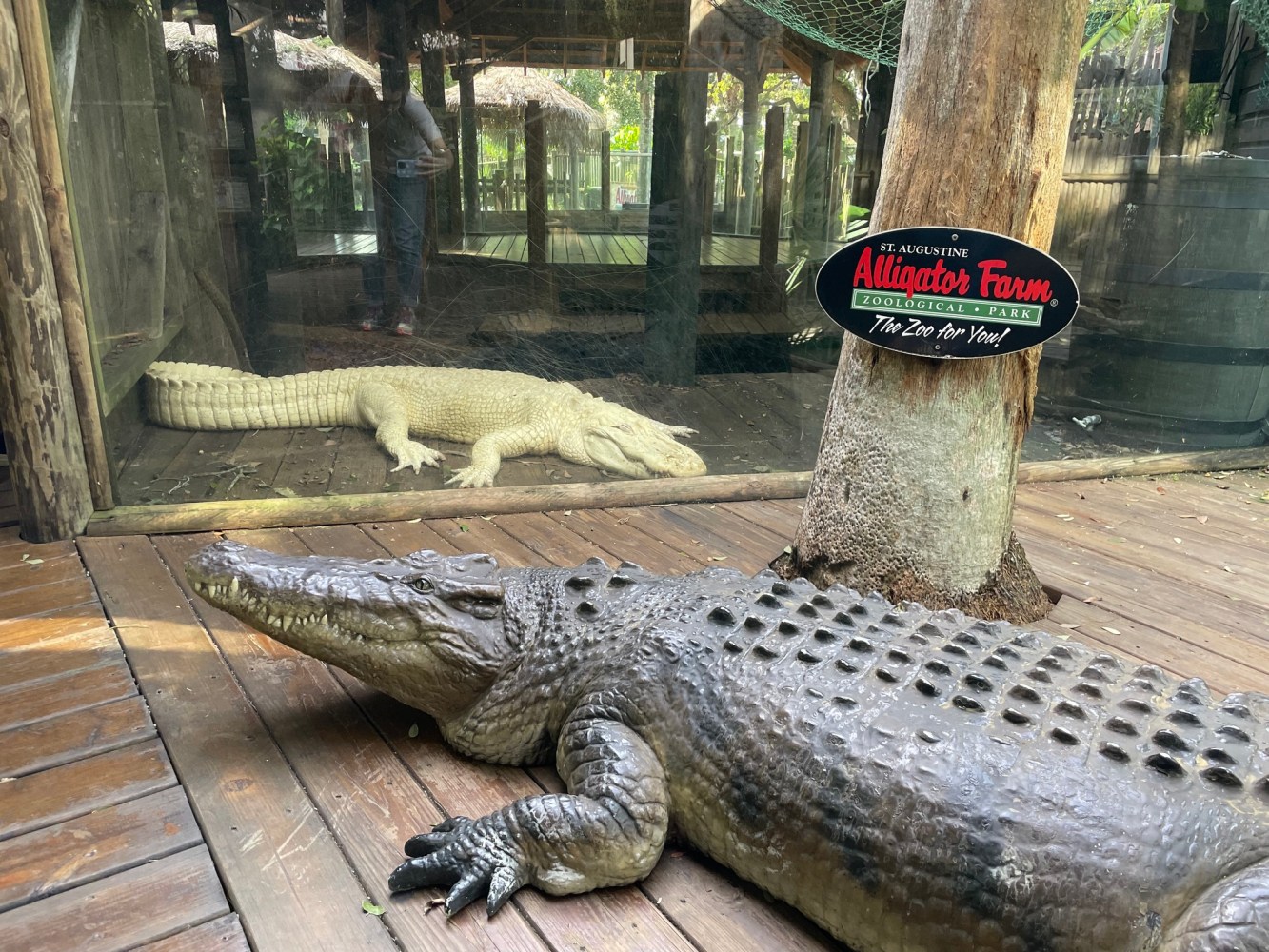
We here at Florida Water Tours love sharing Florida’s wildlife and nature with you too, and invite you to come cruise with us on any of our unique tours and/or private charters. Come see us at the Windward Camachee Cove Yacht Harbor at 107 Yacht Club Dr., St. Augustine, FL 32084. We offer free parking and restrooms on board. Our vessels are just a short walk from our boutique, located at Dock A-23, A-24 and A-25. Email us at [email protected] to book or inquire about your next tour.