
Birds You May See on Your Trip
When we say Dolphin and Wildlife Adventure, you may wonder what we mean by “Wildlife.” Well, some of the most frequently seen animals on absolutely all our trips are birds – soaring in the sky, bobbing by in the water and stalking the shores of the Matanzas River. Check out ten birds that you could see while on a Florida Water Tours cruise:
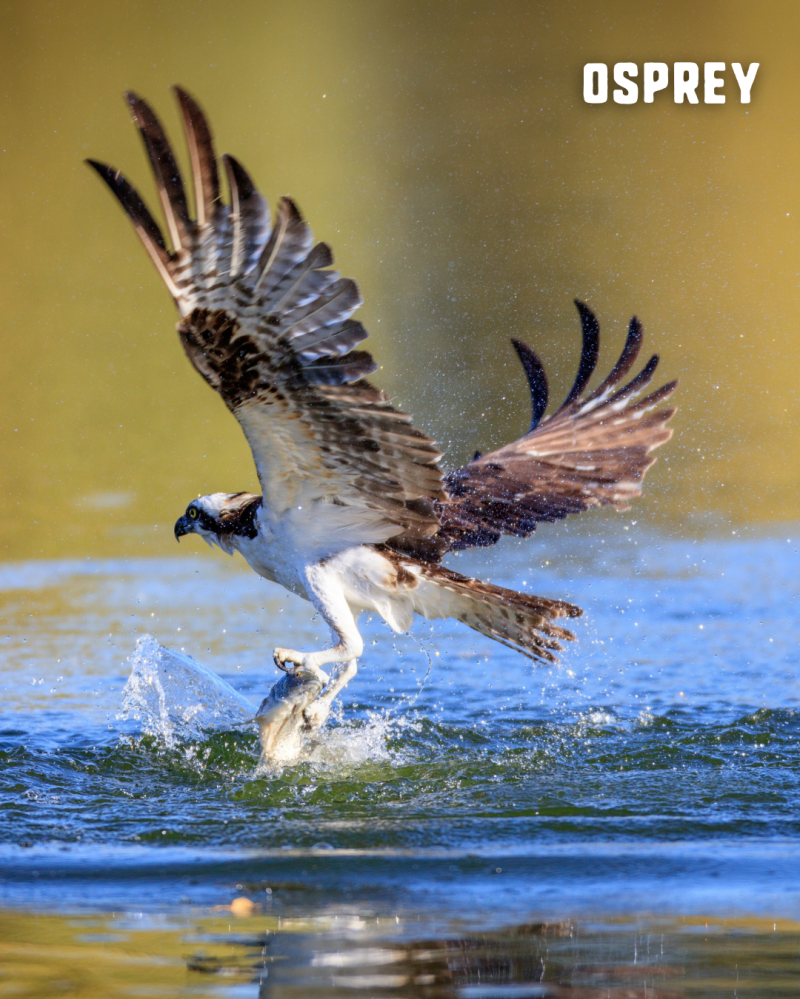
Osprey
One of our favorite birds to watch in the sky, these fish hawks are a common sight on all our cruises. Ospreys are most common around major coastal estuaries and salt marshes, and live in our area year-round. They soar high above the water until they catch sight of prey, then hover and plunge feet-first to catch the fish in their talons. They lift the fish out of the water and fly away, carrying the fish head-forward in their feet. You can often hear their vocalizations, which are a lilting whistle.
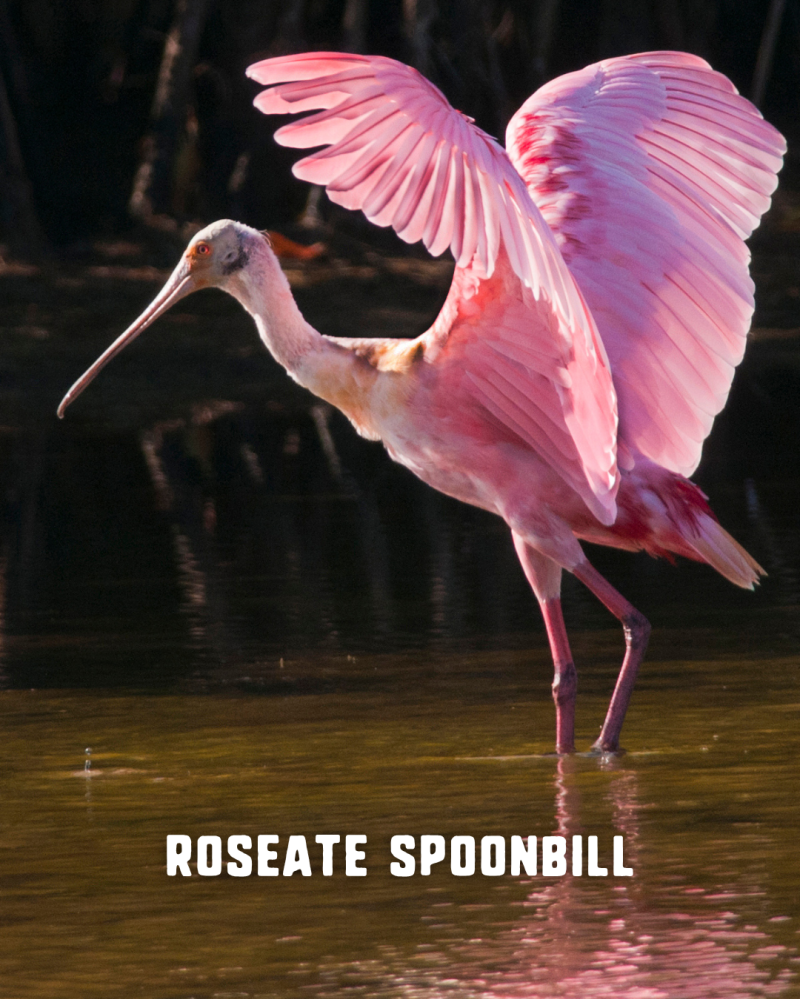
Roseate Spoonbill
No, it’s not a flamingo, but it is a gorgeous shade of pink. The roseate spoonbill is a striking bird that is hard to miss. We often see them in small flocks, wading in the water and swinging their head from side to side, sifting through the mud with their wide, flat bills that resemble, you guessed it, the rounded end of a spoon. They nest in colonies, preferring red mangroves in Florida. Our favorite fact? Their chicks are commonly called teaspoons.
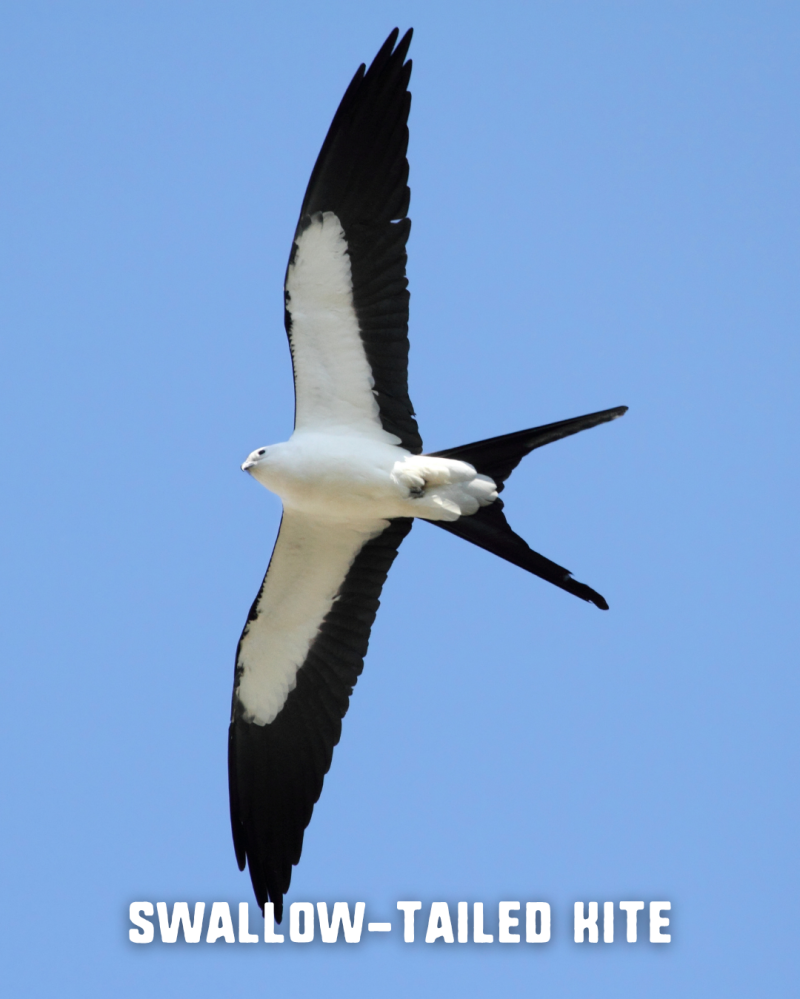
Swallow-tailed Kite
This bird is an absolute stunner when it’s in the sky – graceful, beautiful colors, and a recognizable V-shaped tail. The swallow-tailed kite owns the air, swooping, gliding, floating motionless in the sky, rolling upside down and zooming back up. This bird used to be quite common across the southeast, but now is mostly seen in Florida. They prefer wooded river swamps with tall trees for nesting.
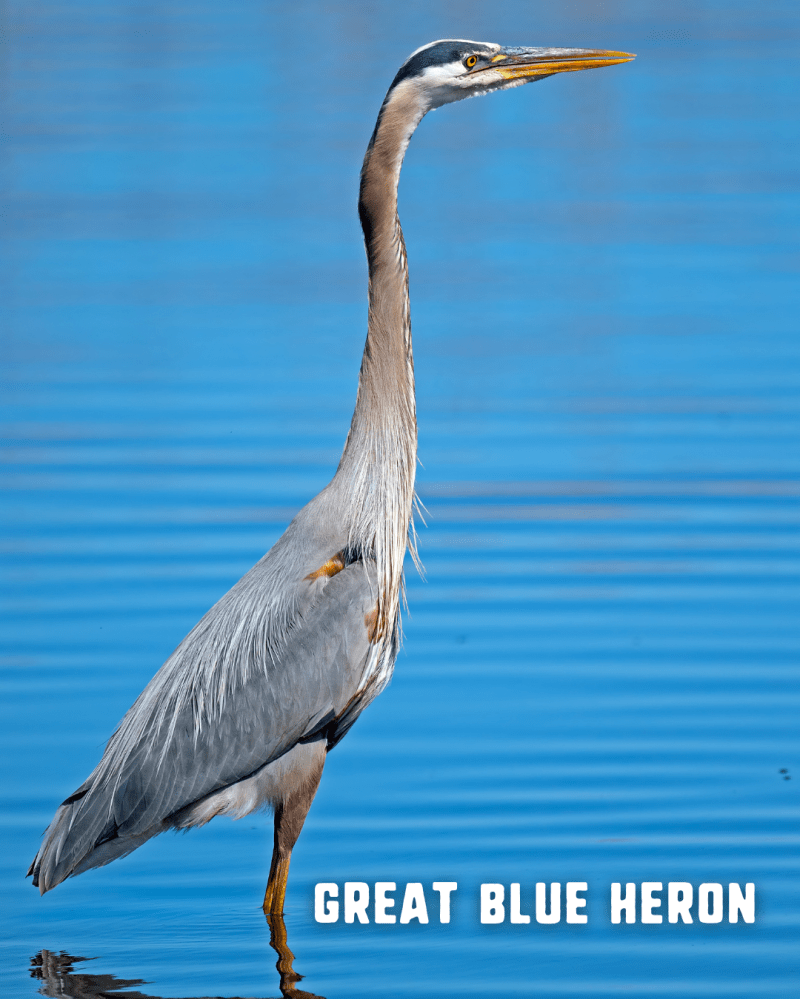
Great Blue Heron
If you’re going to see a bird hanging out in the marshes of the Matanzas River, it’s probably going to be the great blue heron. This tall, statuesque bird is commonly seen wading along the shore, slowly walking and looking for prey. These birds are highly adaptable and are found throughout the contiguous United States. They mainly eat fish, but they’ve been seen snacking on turtles, snakes, smaller birds and even voles and gophers.
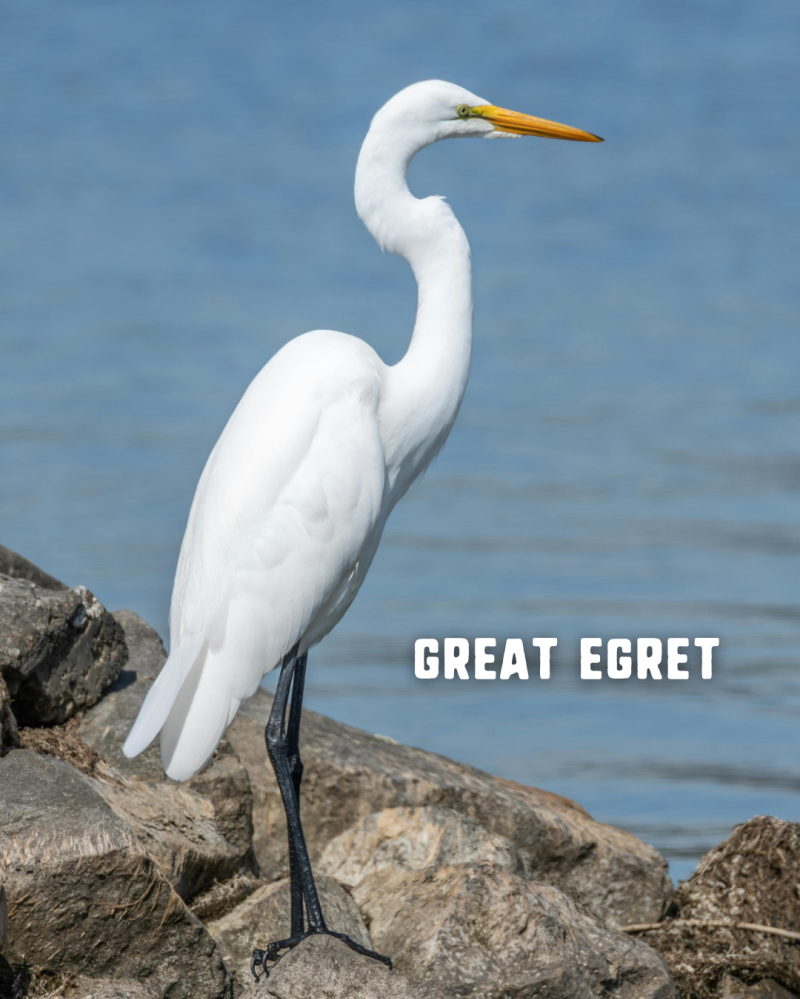
Great Egret
These tall, gorgeously plumed egrets are frequently seen from our boats. They were almost wiped in the United States in the late 1800s, when they were hunted for their pure white feathers for use on clothing and accessories, but they are a conservation success story, with early activists putting protections into place. They have delicate patches of lime green feathers around their eyes. They’re usually seen wading in shallow waters, hunting for small fish, crustaceans, frogs, snakes and aquatic insects.
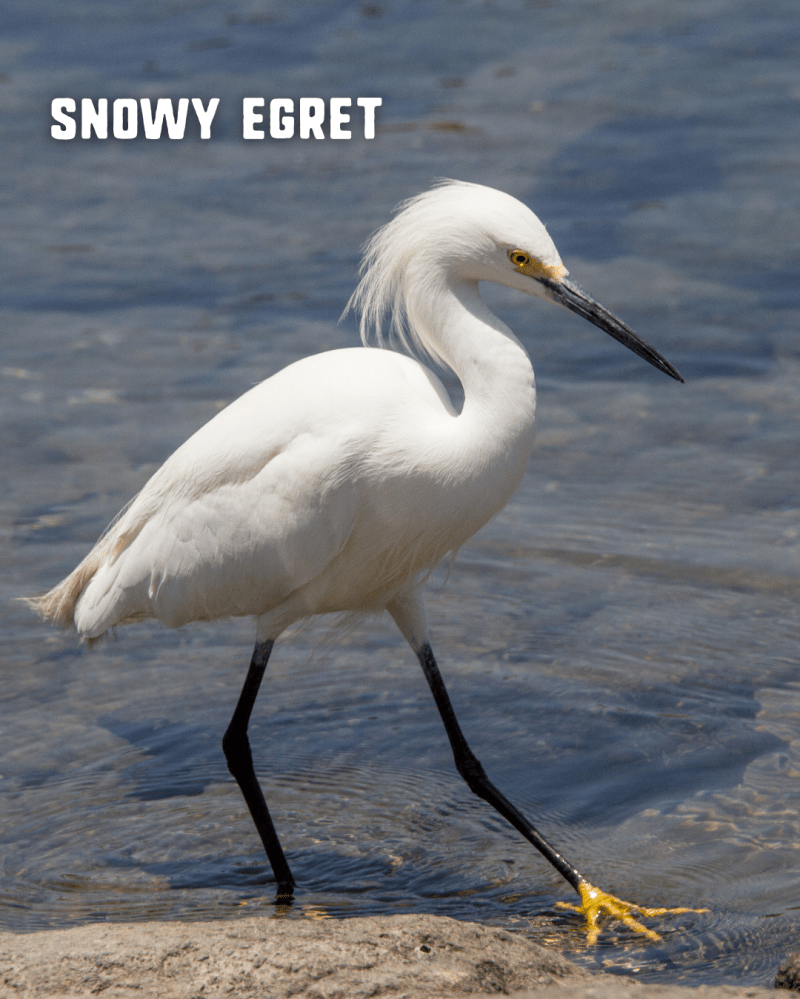
Snowy Egret
The snowy egret is smaller than its cousin, the great egret, but it also has beautiful white plumes that brought it to near-extinction. Unlike the great, the snowy egret has bright, marigold yellow around its eye to its as well as bright yellow feet, contrasting with very dark legs. Breeding adults have a fluffy white crown of feathers on their head. While they do forage in shallow water, they have also been known to follow cattle to catch insects flushes out by the cow’s movements through tall grass.
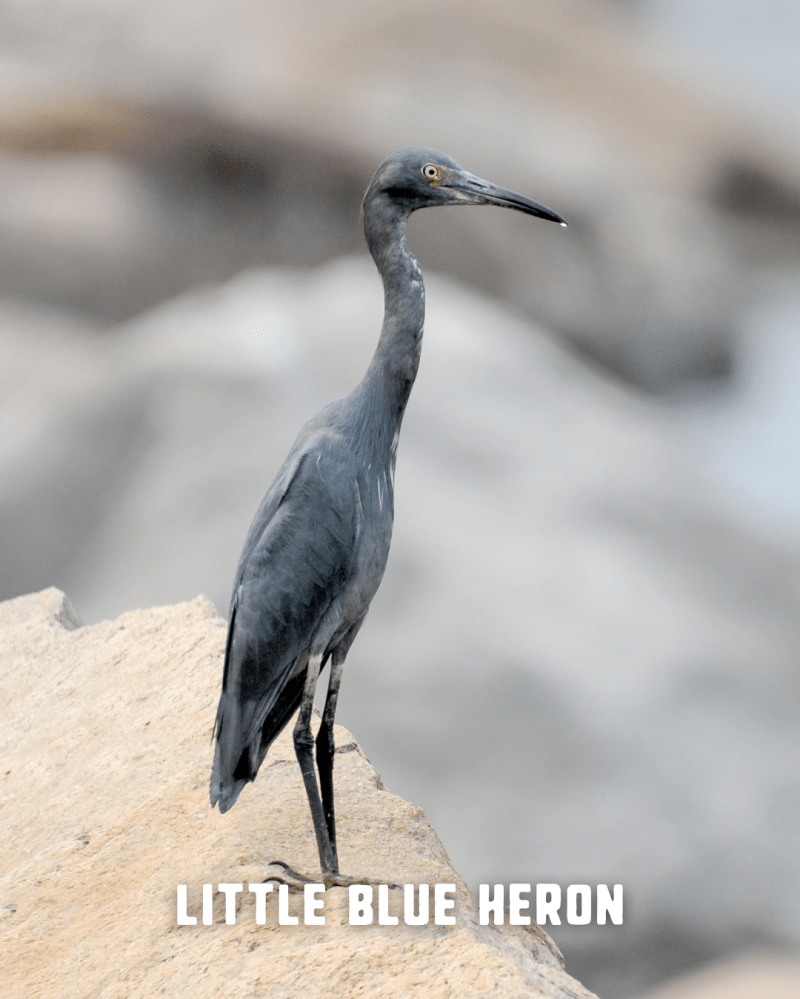
Little Blue Heron
Despite being called a little blue heron, this small blue bird is probably more closely related to the snowy egret. Chicks looks like a snowy, but molt to a dark slate-blue plumage as adults. They are more frequently seen in the marshes, moving very slow and methodically near the shore. They are wary, and startle easily. Because of their darker feathers, they were not a major target of plume hunters in the late 1800s. But we think they’re absolutely beautiful!
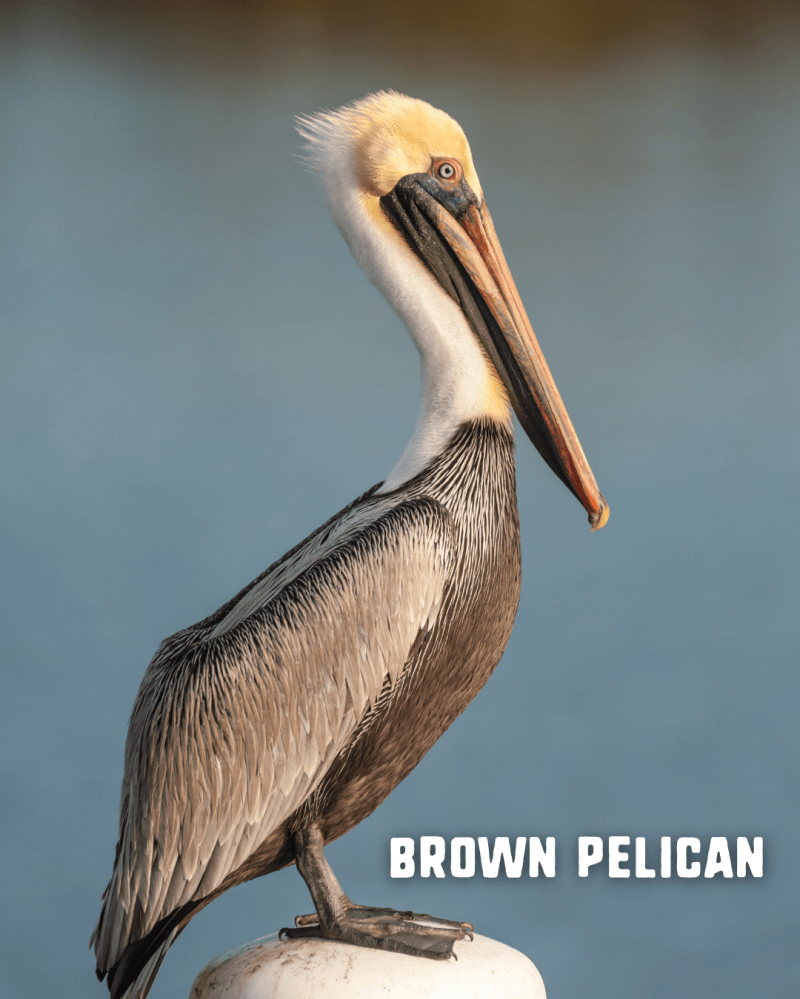
Brown Pelican
The brown pelican is an unmistakable sight, both in flight and when resting on the boats and pylons in our marina. Pelicans often fly low, and in a single file line, flapping and gliding in unison. They are stout, stocky birds, with mostly silver-grey plumage on the top and a dark brown belly. To feed, they plunge into the water and use their large bills and stretchy throat pouch to collect the fish, tilting their bills down to drain the water out. Brown Pelicans are another hugely successful conservation story, after populations plummeted in the 1950s to 1970s due to organochlorine pesticides. After DDT was banned, the population recovered, being removed from the endangered species list in 2009.
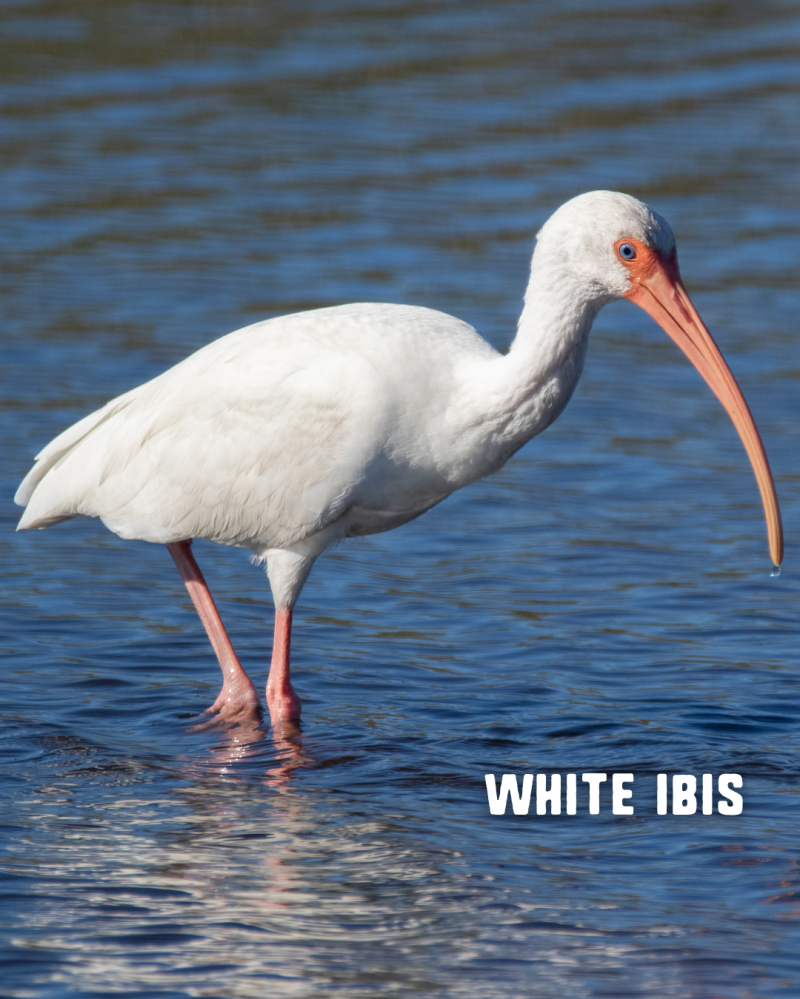
White Ibis
This highly sociable bird is one of the most numerous in Florida. If you have a kid that watches Bluey, you may know their Australian cousins, which the Heeler family refers to as Bin Chickens. The white ibis is frequently seen in groups, wading through the shallows, using their long, curved beaks to probe the ground. They’re also often seen being followed by larger wading birds like egrets and herons, taking advantage of the ibises stirring up the water.
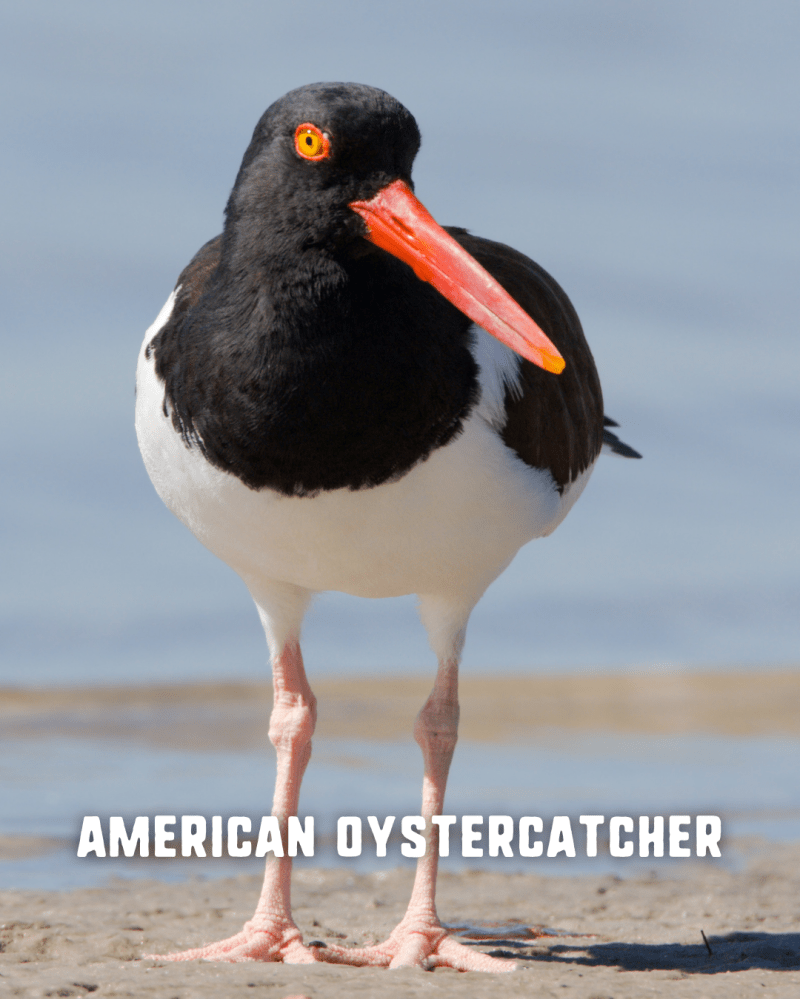
American Oystercatcher
Lucky you if you get a close-up view of an American oystercatcher. The bodies of this bird are a similar color to small gulls, but their heads are uniquely striking. They have bright, fiery orange-red beaks and their bright yellow eyes are rimmed in the same orange-red. The oystercatcher uses its unique bill to open mussels, clams, and, you guessed it, oysters. It jabs its bill into open bivalves, cutting them open, or hammers on closed shells to break them open.
Grab your camera or binoculars and come see some birds with us! You can even download a handy St. Johns County Bird Checklist from the St. Johns County Audubon Society here.